

Preki
The curious journey of a Yugoslav footballer who became a United States international and an American soccer star

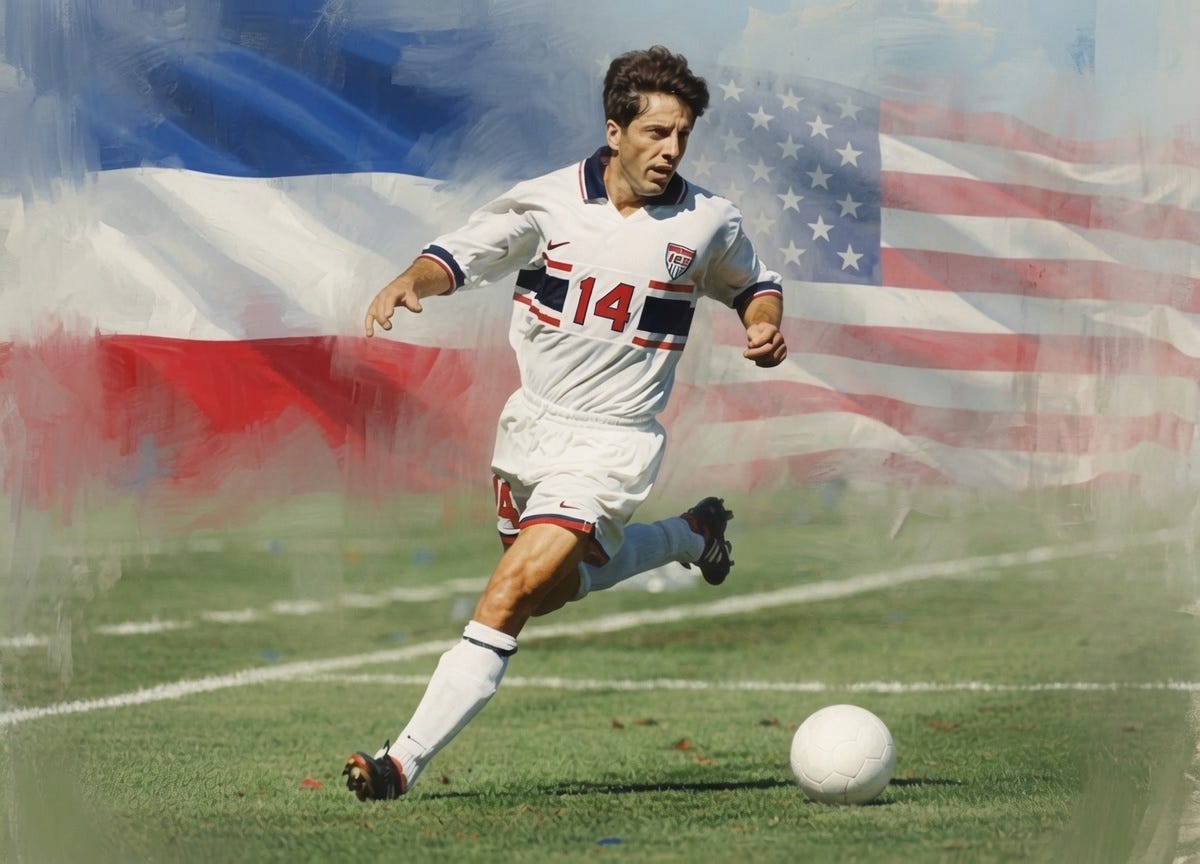
The referee blows his whistle after eighty-three minutes and immediately points to the spot where the foul occurred.
His finger points towards the arc outside of the penalty area—USA are trailing 1–0 and they need this opportunity to try and get back in the game.
Predrag Radosavljević knows a perfect chance for his fine left foot when it presents itself. And everyone on the US team knows the free kicks are Preki’s thing.
‘I was twenty yards from the ball [when the foul happened] and I had no desire to go and take the free kick,’ the midfielder remembers the summer evening in Nantes.
The night is not as hot as it can be this time of the year; the air coming from the nearby Atlantic on France’s jagged west coast is fresh and Radosavljević is in cold sweat.
Reluctantly, he creeps his way to where the foul was given and spends several seconds placing the ball down.
He stomps the grass around the ball, then takes a few slow steps back. Throughout the motions, his head is down and his gaze never goes up, the way a child looks guilty after coming home from school.
He is pensive and in his own world, as if his life blazes before his eyes. He did, after all, make a long way to finally get here – to play at the World Cup.
Radosavljević was born in Belgrade at the beginning of summer of 1963 and grew up in its southern hilly neighbourhood Banovo Brdo.
He trained both football and basketball and many kept telling him he was more talented at shooting hoops.
But as a central midfielder at the local FK Čukarički, the teenager made a dream move to Yugoslavia’s greatest football club, FK Crvena Zvezda.
He was nineteen and considered a player with potential, but in a team with stars such as Vladimir Petrović and Dušan Savić, he was never given a proper chance.
Three unexciting years had gone by and Radosavljević was ready to move on, to get some playing time elsewhere.
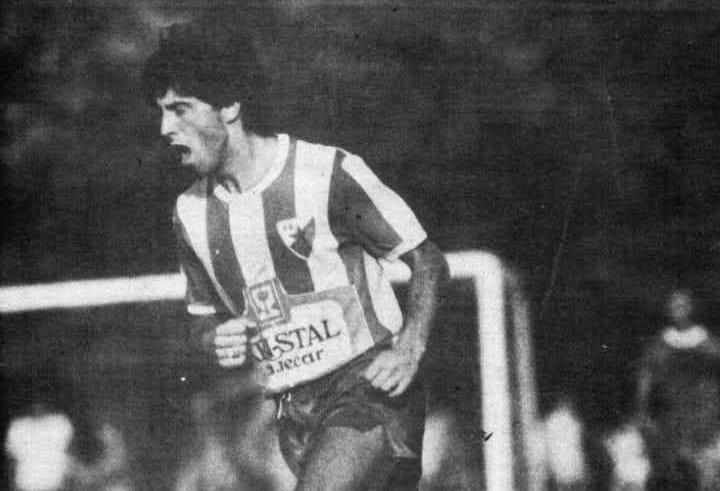
‘I packed my bags and was supposed to leave for Nikšić, on loan to FK Sutjeska,’ said Radosavljević. ‘I was to leave after the mini-football match at a tournament I played in.’
It was not just any tournament. Belgrade was known for a stellar competition of small-sided, outdoor football located in the historic city centre neighbourhood Tašmajdan.
In the nineteen-fifties, the Stadium Tašmajdan was dug in the place of a former quarry—for which the neighbourhood got its Turkish name—and was mostly used for tennis, volleyball, handball and hockey. In the seventies, even a Spanish corrida took place here.
But by the eighties, a prestigious small-sided football competition grew and many famous professional footballers rocked the ground, playing in the tournament after their seasons had ended. One of them was Radosavljević.
Loving the close spaces and the cunning it awakened in him, Predrag dazzled and dribbled and ‘chopped’ the ball; that is, he faked going with the ball one way and then making a cutback with one sudden move of his left foot.
He had no idea Bob McNab was in the stands.
The former Arsenal defender and England international, who played for the Gunners from mid-sixties to mid-seventies, came to Belgrade to scout players at Tašmajdan.
Right there and then, McNab knew he had to sign the guy immediately.
‘He offered me a contract on the spot,’ said Radosavljević.
But this was an offer to play for Tacoma Stars in the US, in their never fully established Major Indoor Soccer League.
‘I had a flight for Montenegro the following morning, but I came home with a signed deal. My mother had to call my father and tell him to come back from Nikšić.’
The move threatened to suck him out of an established footballing nation and spit him out into the backwaters of an American faux-glitz experiment. But he was young, ambitious, and innately confident in his qualities.
‘It was a great chance to make a career. I simply couldn’t miss out on such an opportunity.’
It was in the States that Predrag Radosavljević truly became Preki.
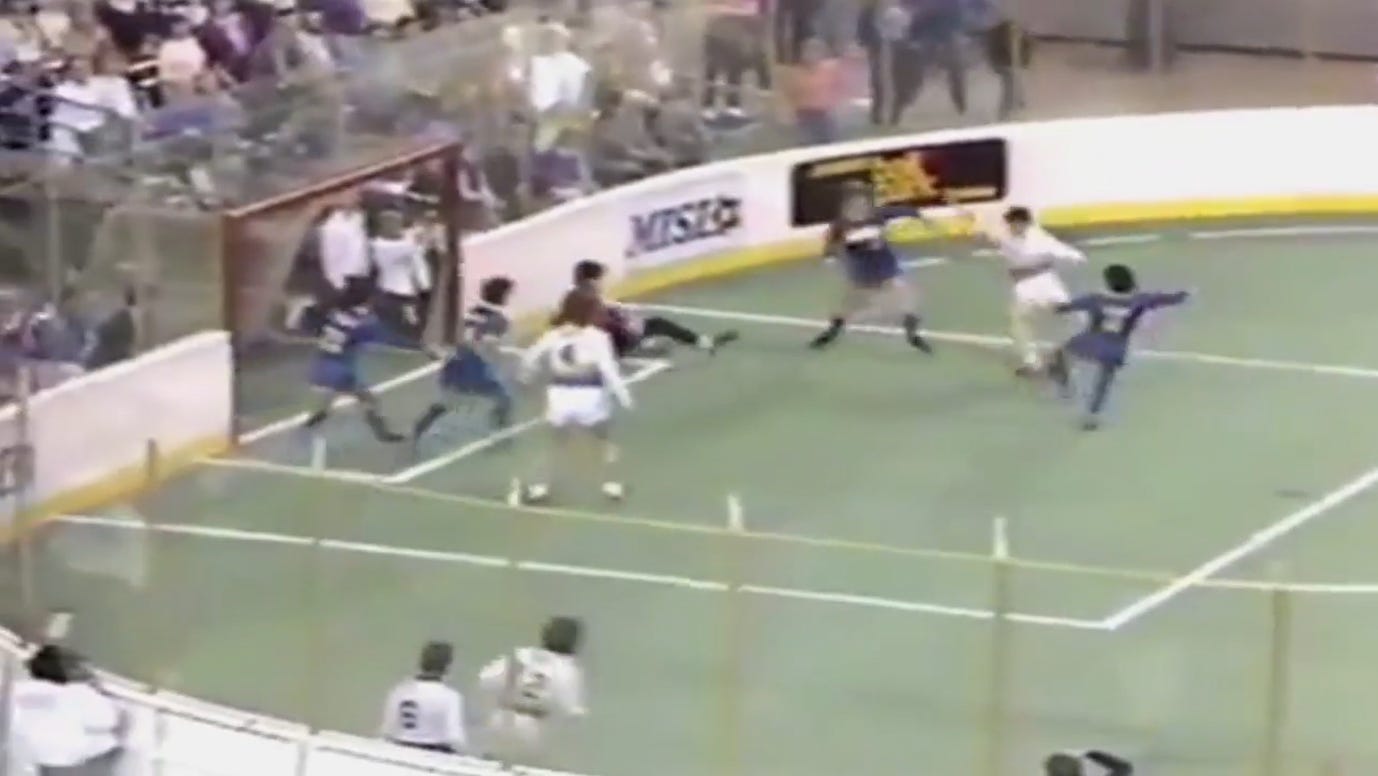
His full name—with the rapturous rolling Rs and viciously placed Vs—quickly became surplus, turning into an unused substitute of sorts, never getting to stand in the way of the elegant nickname Americans found exotic.
Preki played for Tacoma Stars and later St Louis Storm.
He made his mark on what was the American take on overhauling football—a fast-paced six-v-six format of four fifteen-minute quarters, with hockey-like frenzy of substitutions.
His ability caught the attention of those who followed the MISL, but as years passed, the number of followers dwindled.
By 1992, when the league was ripe for going out of business, Preki was sixth in both the all-time goalscoring and all-time assist rankings, with three hundred and thirty-two apiece.
That summer, he flew to England for a trial at Everton.
Howard Kendall was satisfied with what he saw from the midfielder, and the club paid a hundred thousand pounds for the twenty-nine-year-old who had not played professional football in ages.
‘I spent seven years playing indoors, and I lost a lot of time,’ Preki admitted.
The early years of the newly-formed Premier League were tough on him but in his two seasons at Everton and one at Portsmouth, Preki came to love English football and the way ‘people live for it’ despite his struggles.
‘I had an offer to join Sunderland, too. But I was thirty-two and I saw myself elsewhere.’
He returned States-side and in early 1996 joined Kansas City Wizards for the inaugural MLS season.
Soon after, he became a US citizen and was called up for the national team debut against Guatemala. He knew this would mean never putting on the Yugoslav shirt.
‘I never regretted that decision,’ he admitted years later.
Preki’s technical ability, honed first on the streets and then playing indoors, stood out instantly and there was no wonder he became an MLS All-Star in his first season.
At the 1998 Gold Cup, though, he proved his value to the USMNT.
The US were hosting the February tournament and in their final group match against Costa Rica, they were nearing elimination.
With the score still 1–1 midway through the second half, the hosts were desperate for a flash of brilliance and head coach Steve Sampson gave a chance to the Belgrade-born veteran.
Nine minutes later, the Oakland Coliseum was delirious—Preki received a long diagonal ball with his heels scratching the touchline and immediately looked to go inside.
Two Costa Ricans approached him but he did not hesitate; he must have seen this moment before, because he wanted a challenge, he wanted someone to commit.
One of the two did and Preki nearly jumped over him, dribbling to his left, then sent a powerful shot into the top corner, and the USA into the semifinal.
‘You put him on when everyone’s tired and he just rips a bomb,’ screamed Fox Sports World’s Kevin Wall.
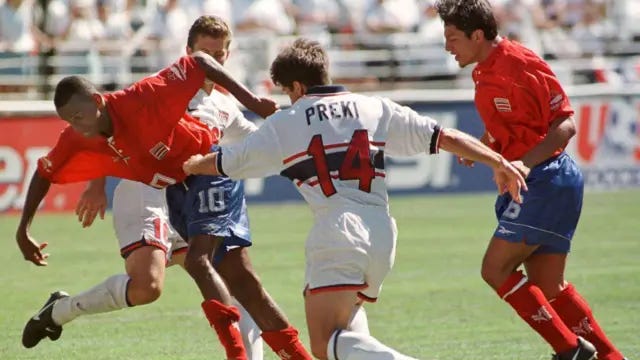
The strike’s beauty matched its importance, as it set up a clash with the reigning world champions, Brazil.
The Gold Cup invitees could not bring their strongest squad midway through the spring-fall season, but Mario Zagallo still had captain Romario and Edmundo playing up front, with Giovane Élber coming on from the bench.
Preki was a substitute as well, and he came on at the hour mark. Five minutes later, standing twenty-five yards from Brazil’s goal, Eric Wynalda found him with a pass.
The script was the same. Preki’s soft touch moved the ball to his left, he got past a lunging opponent, and fired an unstoppable shot – Taffarel stretched his dive but it was not enough. Brazil were out: 1–0.
USA unexpectedly reached the final emboldened by Preki’s goals, but he could not repeat the trick for a third time. Mexico won the final on home turf in Los Angeles, but it was clear—the midfielder’s place in the World Cup squad was as certain as sunrise.
Preki did not play in the opening 2–0 loss to Germany at the Parc des Princes. Their second match, though, was there for the taking.
USA faced Iran at the Stade de Gerland in Lyon, in what was then described as the ‘most politically charged game in World Cup history.’ When Preki came on near the hour mark, Iran already had a 1–0 lead.
Mehdi Mahdavikia doubled it after eighty-four minutes, but Preki nearly helped the US get the point.
‘I made the assist for Brian McBride’s goal,’ he remembered. ‘But I should’ve had another assist, when David Regis hit the post and we failed to get a draw.’
The 2–1 loss had eliminated USA, and when the match in Nantes arrived, they all knew it was to be their last.
With seven minutes to go and trailing 1–0, the US were about to end the tournament without a solitary point.
Wynalda launches a long ball forward where Cobi Jones is fouled in the air. The referee blows his whistle and points to the spot where the foul occurred.
Preki timidly placed the ball, preparing for the shot he did not want to take, knowing his goal could hamper the opposition – his native Yugoslavia.
‘Before that match, I felt a lot of emotions,’ Radosavljević said of the USA’s match against his country. ‘I listened to our anthem and, of course, I’d put my hand over my heart, but I am sitting on the opposition’s bench.’
This was not the same Yugoslavia he left as a twenty-two-year-old; this was a smaller one, comprised of Serbia and Montenegro, but with the same people he knew from Belgrade.
‘We came out to warm-up at the side where Serbian fans were, and Dejan Savićević and I greeted each other. We had done almost no warm-up.’
When Vladimir Jugović’s foul on Cobi Jones happened, Yugoslavia were still chasing a larger win to try and top the group on goal-difference ahead of Germany.
Preki knew his goal would have cost Yugoslavia the first place and, even more so, he knew what his left foot was capable of.
But possibly his last chance to fulfil the dream of scoring a World Cup goal came when he least wanted it.
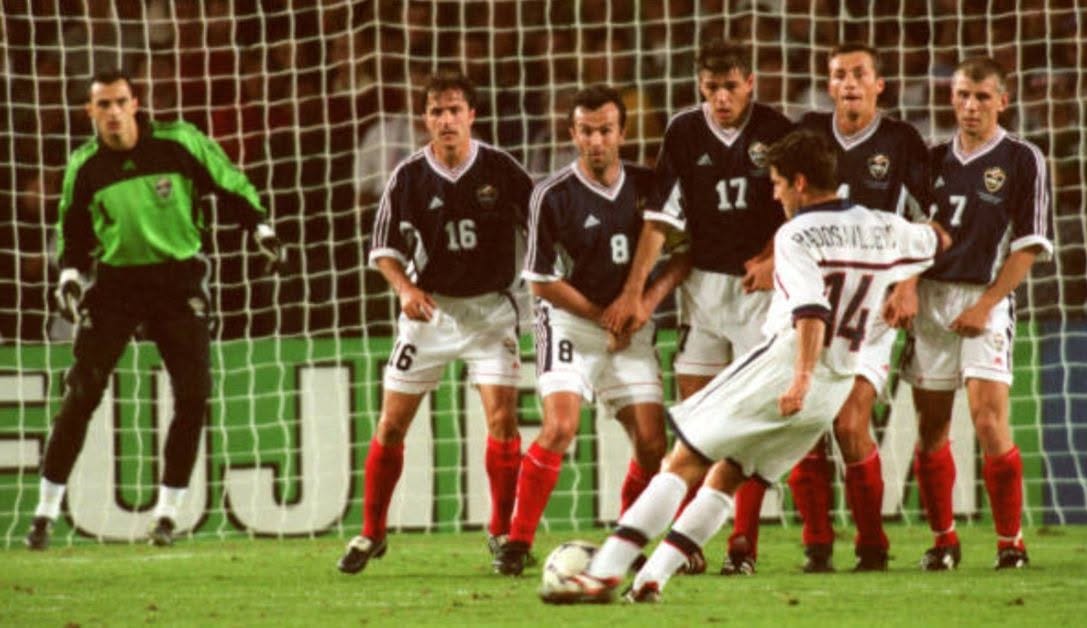
‘[Yugoslav goalkeeper Ivica Kralj] somehow left the angle open,’ Preki remembered. ‘I closed my eyes and took the shot over the wall, and the ball hit the outside netting.’
The Belgrader could breathe again.
‘It’s better that the ball didn’t go in. Better that than to think what my friends would’ve said to me.’
Yugoslavia unconvincingly kept the 1–0 lead and finished second in the group, before getting eliminated at the hands of the Netherlands in the round of sixteen.
Preki, who turned thirty-five the day before the game, never again played at such a great stage, but the years he lost playing indoor football, in a way, he got back.
He shone in the MLS for the next seven years, until 2005, and defined the league in its first decade.
At thirty-eight, after winning the MLS Cup with Kansas City, the club did not want to keep him due to his age, so Preki’s grit and resolve took over.
He joined Miami Fusion, one of the league’s weakest teams and helped immediately transform it into Supporters’ Shield winners. Kansas City brought him back for the following season.
At forty, he won his second MVP award—record possibly only Lionel Messi could break if he was to be bothered about it.
At forty-two, he scored the final goal of his MLS career, in his final match, setting another record for the books.
In his twenty-three years as a professional footballer, there was ever only one match he did not want to score in.
And Preki succeeded in that, too. ◆
Quotes used from Preki’s interviews for BBC in Serbian and Mozzartsport.

Preki was more than a cult hero for US Soccer fans. In many ways, he helped define the modern era, where players like him from all around the world found a place in the national team set up. Their impact ensured the sport's growth and made us more than also-rans in the World Cup.
Preki was an amazing player. Loved watching him here in the States.
It always brings a smile to my face when the TV cameras will pick him out on the Seattle bench next to Brian Schmetzer.