

Remembering Siniša Mihajlović
His premature death saddened the region of former Yugoslavia, the country he unknowingly symbolised with his good and less good sides, and the cruelties of life that befell him

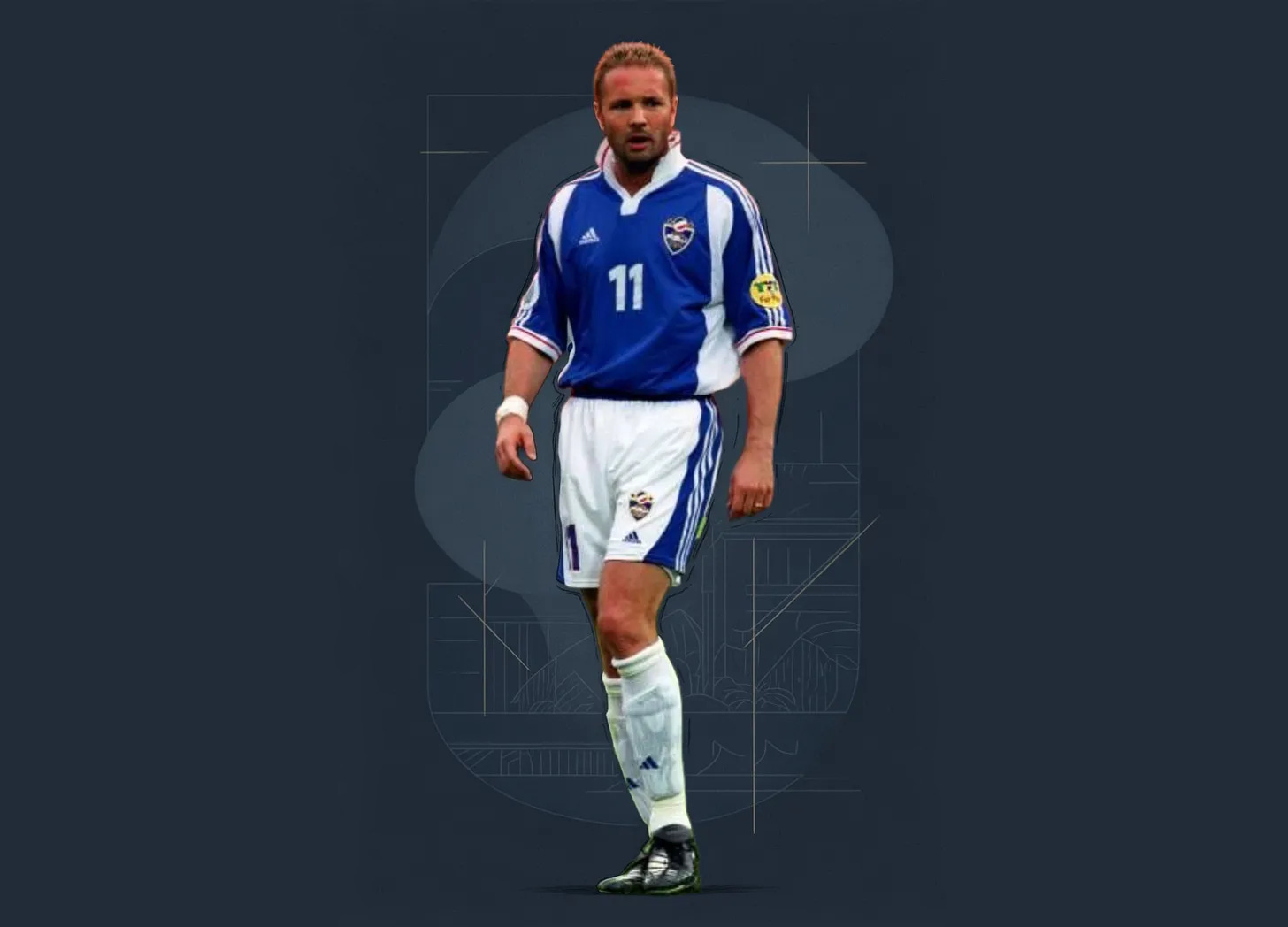
Originally, I wrote this story on the day Siniša Mihajlović passed away, more than three years ago. Today, on 20 February 2026, he would have turned fifty-seven. Below is the translation of the story, with minimal changes and explanations added for better comprehension.
How do great fighters endure defeat? With difficulty, but with their heads held high.
For them, losing and having to lend a hand to a better player is not the biggest problem. The only problem they could have is if they did not give it their all.
There was no such thing with Siniša Mihajlović. Not even when he persistently smashed up his neighbours’ garages in his native Borovo, near Vukovar, in modern-day Croatia.
There, he practiced his devastating left foot, the one he would use to conquer Europe and the world. He did not give up even when told, in the summer of 2019, that he was suffering from leukaemia, the most vicious opponent he had ever faced.
In the end, he did not make it. Mihajlović lost his most important fight and passed away on 16 December 2022, at the age of fifty-three. His family confirmed they were saying goodbyes to an exemplary husband, father, son, and brother.
In his trophy-laden career, Mihajlović won the European Cup and Intercontinental Cup playing for Crvena Zvezda. Nicknamed ‘Barbie’ because of his long curly hair, still only twenty-two at the time, Siniša grew into an imperfect symbol of Yugoslavia, a country whose end was nearing.
He was a fighter with a steely will. Not in the clichéd sense, but the embodiment of a spirit that does not give up on victory and demands only the best from those around him, even if he sometimes goes too far in that pursuit.
He had been a fighter since his teenage days. While playing in Vukovar, he first attracted the attention of Dinamo Zagreb, which he did not join. At the time, Miroslav Ćiro Blažević—who later led Croatia to third place at the 1998 World Cup—said he had enough good midfielders. And added that Mihajlović should cut his long hair.
‘I thought what mattered was what kind of player I was, not what kind of haircut I had. Because I did not accept Dinamo’s offer, Mirko Jozić did not invite me to Chile (for the U20 World Cup, ed.), but I got my revenge on him when I became world champion with Crvena Zvezda, beating his Colo-Colo,’ Mihajlović exclaimed decades later, in his typically fiery manner.
‘Miha’ made history with Vojvodina, too. He helped them win Yugoslav Championship in 1989, and then spent two stellar years with Zvezda. He won the title again, but added a European Cup in Bari, and the world title in Tokyo. And somehow, he was always at the centre of these successes.
His masterpiece free-kick against Bayern Munich in Belgrade opened the doors for Zvezda to reach the final. The run that followed his goal and his exuberant jubilation have been etched into the memories of millions of fans over the past thirty-five years.
His stoppage-time cross, at the end of that same match, bounced off the hapless Klaus Augenthaler, and seemed to have sent Zvezda to the European Cup final from the skies themselves.
That left foot of his would later break records in Italy, and his hat-trick of free-kicks for Lazio against Sampdoria remains unmatched to this day.
But then came the bloody war. Miha was one of tens of thousands of people from mixed backgrounds who suffered the most during those years.
Born to a Serbian father and Croatian mother, he was deeply affected by the horrors of Vukovar, a city that became the image of the destruction the civil war brought.
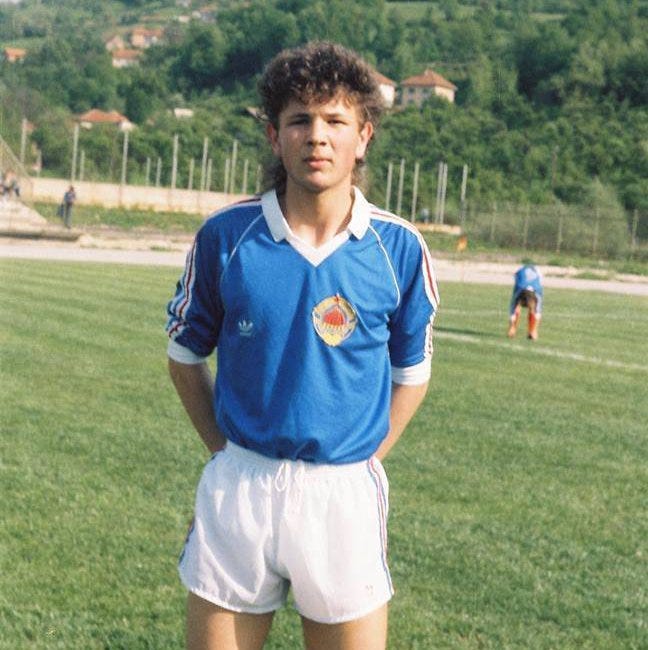
‘All wars are terrible. But fratricide – the war that we experienced in the former Yugoslavia is the worst thing that can happen. Friends shoot each other, families fall apart. I saw my people fall, cities disappear. I saw how everything gets erased. My best friend destroyed my house. My uncle—a Croat, and my mother’s brother—said he wanted to slaughter my father like a pig,’ Mihajlović said in a grand interview for his fiftieth birthday.
It is through Mihajlović’s character that the virtues and flaws which so accurately define this region are interwoven: firmness, pride, resolve, but also stubbornness, impulsiveness, and a quick, sharp tongue. Siniša possessed all of the above, as well as the rascality, that typically Balkan attitude of ‘now I’ll show them.’
And he could indeed be reckless. Like when he spat on Jens Jeremies at the World Cup in France. Or when he got sent off against Slovenia at EURO 2000, while Yugoslavia were trailing 3–0. But that also made him one of our own, for better or for worse.
‘I have a strong character. I am a Serb from head to toe, with all the virtues and flaws of my proud people. I know how to admit my mistakes, I know how to give and receive apologies, and I am always ready for dialogue. They think I am a tough man—that is true. And it is better not to provoke me. But even a man with balls can be moved. When I first went back (home), I cried like a child, I could not stop the tears. I felt stronger. I was more of a man that day than ever in my life.’
His winning character helped Lazio win their last Scudetto to this day, as well as the final Cup Winners’ Cup. He was also the Footballer of the year of FR Yugoslavia in 1999, the very year when Miha led protests against the NATO bombing of his country.
At a time when this was not a popular move, Siniša highlighted at every turn what he felt was a great injustice, often wearing the famous T-shirt with a target across his chest. He sought peace, the peace that disappeared so quickly from his Vukovar.
He played a total of sixty-three matches for the national teams of SFR Yugoslavia, FR Yugoslavia, and Serbia and Montenegro. The last came in the catastrophic 3–0 loss to a not-so-mighty Finland. With the national team, he failed to achieve the brilliant successes of his club career.
Here too, Miha was a painfully realistic representative of the imperfections of the local mentality.
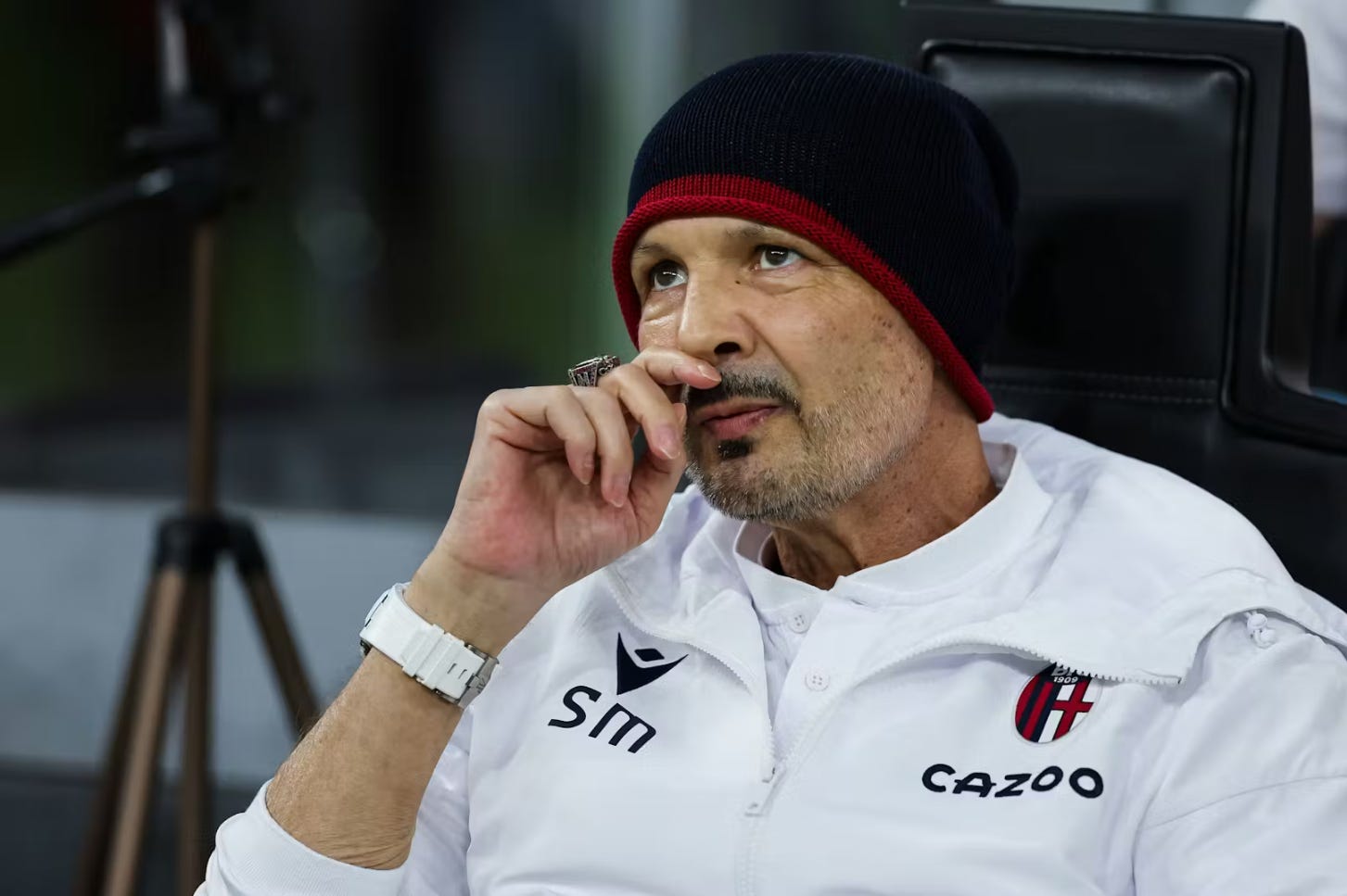
‘I played in the national team when we had a great squad. We had Savićević, Mijatović, Piksi Stojković, Đukić, Jokanović. But together, we did not do anything special. The real achievements were missing because we did not behave the way we should have. Me first, then everyone else. We came to Belgrade looking more to meeting our relatives than to think about the national team. It is my obligation this time, as the coach, to select players who will not make similar mistakes,’ Mihajlović said upon becoming Serbia’s national team coach.
That position was one of the two he had hoped to reach as a coach.
For the first of them, it seemed he was not yet sufficiently prepared or mature. With him at the helm, Serbia failed to qualify for the 2014 World Cup, yet by the end of his mandate Mihajlović himself had learned a great deal about who he was and about his, as he put it, proud people.
‘I would do everything the same again. Even the mistakes. Because there are no perfect lives. And they would be dull as well. If I am who I am today, it is also thanks to my mistakes. I have lived these fifty years in the way I wanted,’ was the thought with which Mihajlović concluded one of his defining life interviews.
He never managed to fulfil the second wish – he did not live to return to his Crvena Zvezda and manage its team.
Perhaps because, as a coach, he outgrew this milieu, far more fragmented than it had been in his playing days. He did not succeed in this, just as he could not defeat the cruel disease, his most ruthless opponent.
But even there he fought until his last breath, and that is what true fighters do.
Fighters like Siniša Mihajlović. ◆
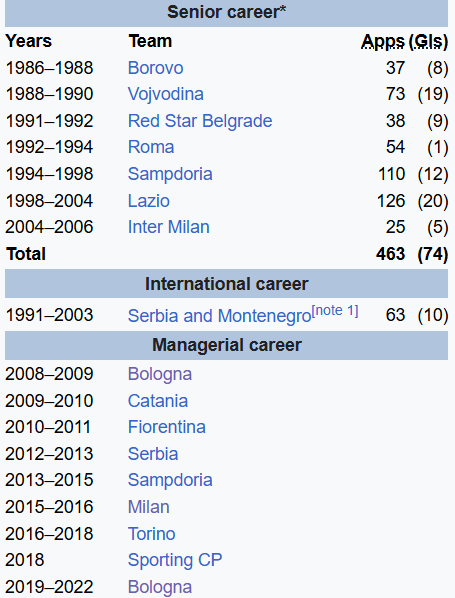
Also from The Belgrader:
Beautiful piece, Nebojsa.
Hi. Greetings from NJ, USA from a Chilean that began watching footy [and Serie A] in the 90s. I have a soft spot for Mihajlovic, as he was teammates with Salas at Lazio. In Chile, even though I am Inter, we were all so happy when Lazio won the league title. Then Sinisa joined Inter. I also loved how he wore his collar up. Had no idea, btw, he won the league title with Vojvodina, of all teams. Regards.