

The Marko Nikolić Dossier
Players and analysts explain the tactics, authority and personality behind one of Europe's underrated coaches

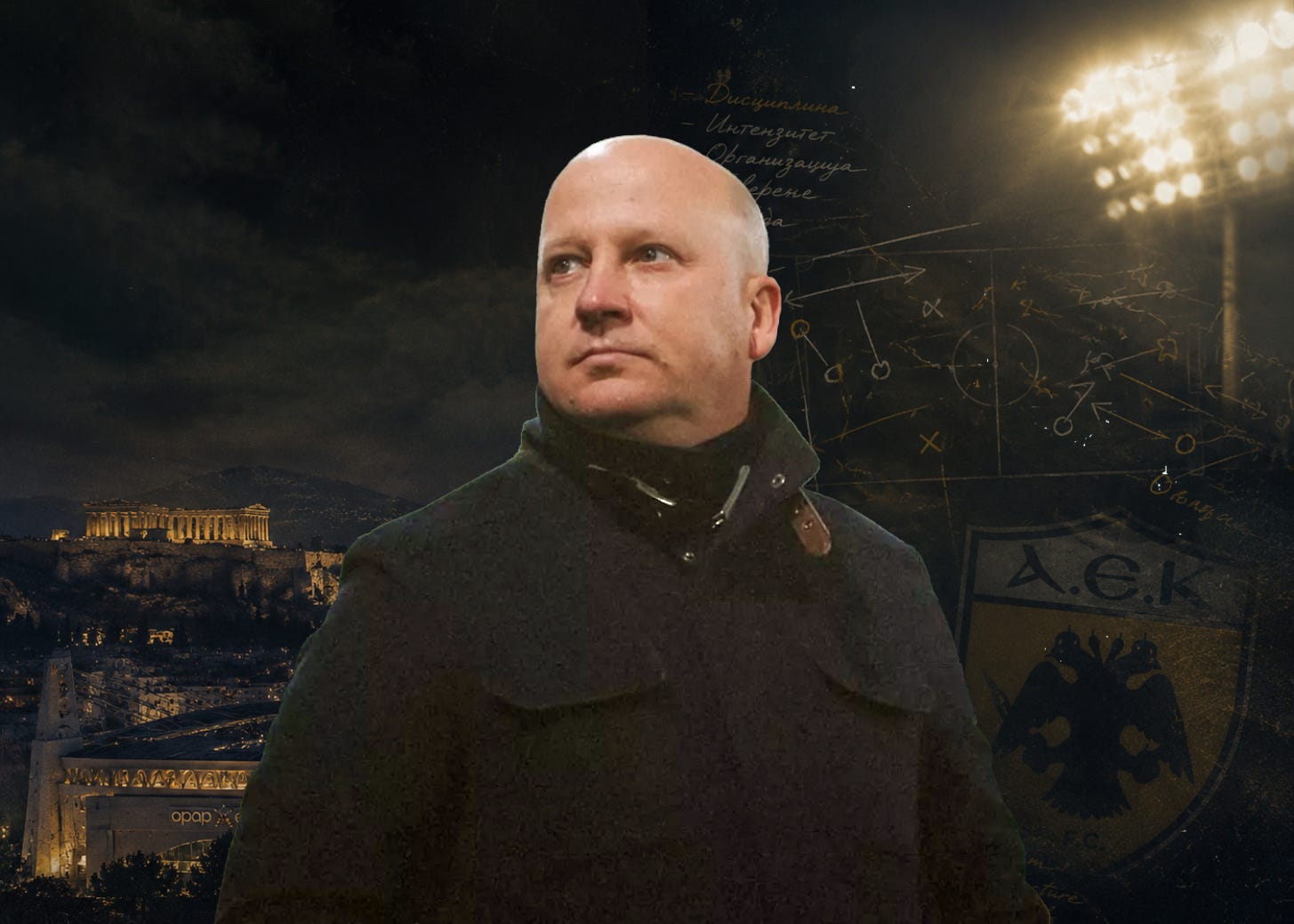
The clock had ticked into the ninety-third minute in Athens when Luka Jović went into a challenge inside the opposition penalty area. He held off his marker just long enough to flick the ball on with his head, dropping it behind him for João Mário to run onto and score.
Everything inside the Agia Sofia Stadium draped in black and yellow began to tremble with emotion. The substitutes burst onto the pitch at full sprint, while former Liverpool midfielder Marko Grujić embraced and kissed the goalscorer.
Only head coach Marko Nikolić remained composed. AEK had taken a 2–1 lead against Panathinaikos, and only a few more minutes needed to tick by before his side would become champions of Greece.
It was only after the final whistle that the Serbian manager finally raised his arms in celebration—within seconds, he was engulfed by a crowd.
‘You could see it yourself during the title celebrations. Every player runs to him first to hug and kiss him,’ Petar Grbić, a former Partizan player during Nikolić’s spell at the club, tells me. ‘That says everything about his ability to build a team that becomes his army, one willing to give everything for him. It’s that sense of togetherness that brings him success.’
Even before the title had been mathematically secured, former Crvena Zvezda coach Ratko Dostanić told Greek journalists that Nikolić was the best Serbian manager.
Whether he is or not, people will always discuss, but Marko Nikolić is undoubtedly the most consistent Serbian coach at the moment.
After winning the domestic double with Partizan, collecting silverware in Hungary, and lifting two Russian Cups with two different clubs, he has become a hero in Athens in record time, winning a trophy in his fifth different country (also won UAE Super Cup with Shabab Al Ahli).
‘Nothing but the very best to say about Marko,’ says Boban Nikolov, who worked with Nikolić at Videoton in Hungary. ‘He’s a proper rogue of a manager, in the best possible sense of the word. He always gives absolutely everything, so nothing about his success surprises me. Do you know why God rewards him? Because he does things the right way.’
So, what is it that makes Nikolić the manager AEK sporting director Javier Ribalta was so desperate to bring in last summer that the club paid six hundred thousand euros in compensation?
And what exactly does the Belgrade-born coach do that turns his players into what many describe as ‘his soldiers’?
Nikolić was still in his early twenties when he started on his coaching path after an injury prematurely ended his playing career. For years, he was developing at FK Rad, before getting the chance to take over the team in 2008, when he was just twenty-nine.
He quickly stabilised the team in the Serbian Superliga and, at times, turned them into genuine contenders for a place in European competition.
‘Even back then, you could see that he stood out from the crowd,’ says Branislav Milošević, the defender Nikolić brought to Rad from BSK Borča.
‘Tactically, he was ahead of the rest. Matches were prepared in such detail that the only way a player could struggle on the pitch was if he hadn’t paid attention during the video sessions and everything we worked on throughout the week.
‘Back then, video analysis wasn’t nearly as widespread as it is today. With his excellent coaching staff, he was already making the difference,’ Milošević explains.
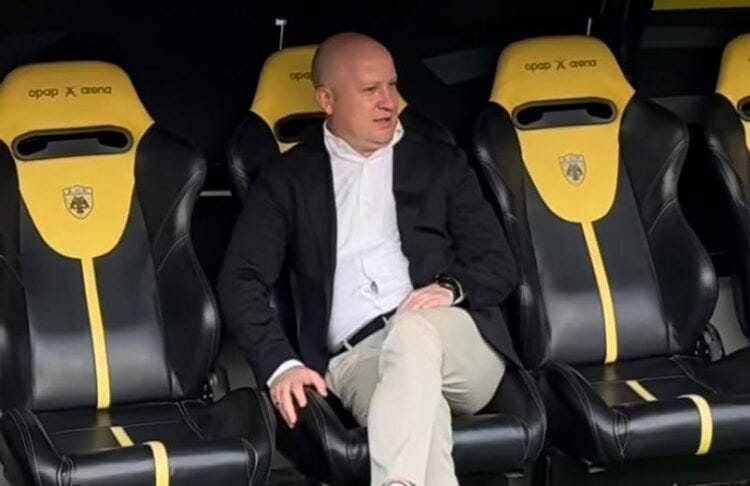
For years, Nikolić’s backroom team has included Radoje Smiljanić and Goran Basarić, while Aleksandar Rogić was previously part of the set-up as well.
‘They are all top-class professionals. Exceptionally open, honest, approachable and principled,’ a leading analyst at CSKA Moscow, who worked with Nikolić during his time in Russia, tells me.
Wherever he has worked, Nikolić and his staff have been praised for the authority they command, and not in the negative sense of the word.
‘He had authority over every player, but he earned it solely through his knowledge,’ Milošević explains. ‘He convinces you through what he knows. Then, in matches, you see us comfortably beating teams you thought would cause problems. But we win because of everything we worked on during the week, and that’s how he earns that authority.
‘Once that starts happening, you simply trust him. That’s not always the case with every manager.’
Grbić also believes that authority built on expertise is the key.
‘Tactically, he’s an outstanding coach. He knows how to set a team up, both in relation to the opposition and in line with how he wants his own side to play.’
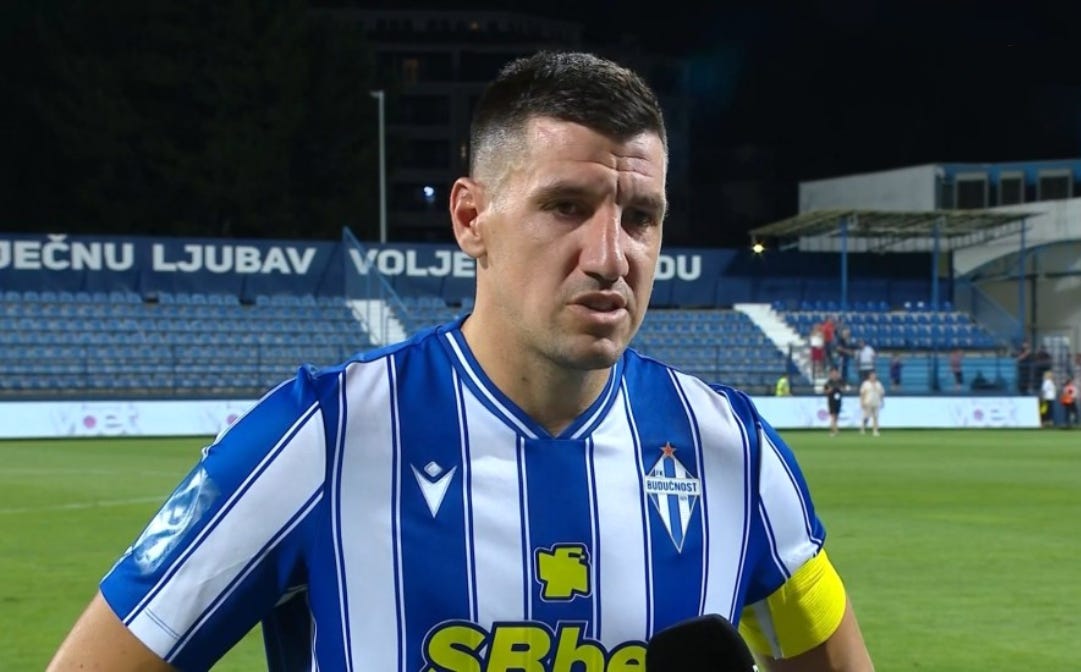
Another analyst from Russia, who spoke on condition of anonymity, reveals that preparing for matches against Nikolić’s CSKA was the most difficult tactical challenge his club faced all season.
‘From a tactical perspective, many teams in Russia play man-to-man. That creates a very difficult question: how do you play man-to-man against a Nikolić side that operates with a midfield diamond?’
Nikolić earned widespread praise in Russia because, upon arriving at both Lokomotiv Moscow and CSKA, he introduced his tactical demands gradually rather than attempting to overhaul everything overnight.
‘At both clubs, he slowly transitioned the team towards a 4-4-2 diamond system, what many would also call a 4-3-1-2. It was particularly problematic for opponents when he was at CSKA because the midfielders in that diamond covered enormous ground.
‘That allowed several young players to flourish, including Kirill Glebov and Matvey Kislyak at CSKA. Of course, it also helped that he had experienced players in both squads to assist with implementing his ideas — Grzegorz Krychowiak at Lokomotiv and Miralem Pjanić at CSKA,’ says the same analyst, who works for a Russian Premier League club.
Nikolić has often needed time to introduce his tactical concepts. Once the foundations are in place, however, he has regularly used the winter break to mould the team entirely in his image.
At Lokomotiv, he began the spring of 2021 with ten consecutive wins. Last season at CSKA, his side suffered just one defeat in seventeen matches after the winter restart. This year, AEK finished their league campaign on a seventeen-match unbeaten run, while also reaching the quarter-finals of the UEFA Conference League.
‘He is a coach who believes in building systems, and his teams are equally capable of attacking and defending,’ says the Russian analyst who worked alongside Nikolić at CSKA.
‘With his staff, he improves every phase of the game progressively. He starts with the simpler concepts and gradually introduces the more complex ones. Because his teams are always so well organised in every phase of play, he consistently delivers results. That’s why I wasn’t surprised to see him succeed straight away at AEK.’
The same traits were evident during his early days at Rad.
‘The work was carried out with incredible seriousness,’ Milošević explains. ‘Marko is obsessed with detail. After you’ve worked with him for a while, you become part of that mechanism. You could almost close your eyes and know exactly where the opposition player you were marking was. At every moment, you knew precisely what you were supposed to be doing.’
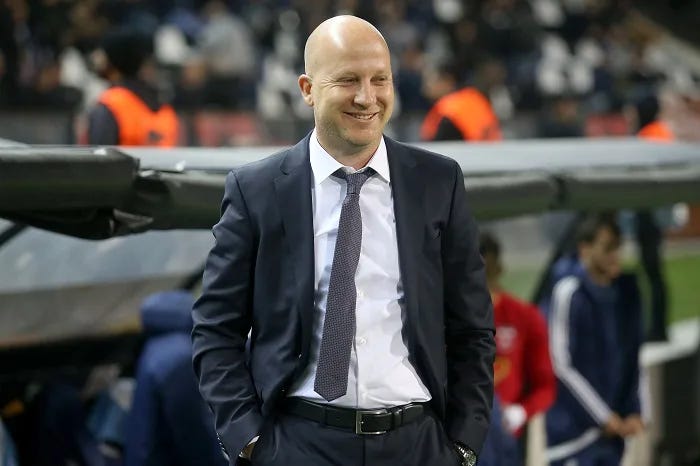
But as any footballer worth his salt will tell you, all the tactical expertise in the world means little without the human side of management.
Judging by the testimony of those who have worked with him, Marko Nikolić possesses that quality in abundance.
‘Marko is a Belgrade lad and he has a real gift for identifying who can become a leader in the dressing room and what each player is capable of offering,’ says Petar Grbić, recalling conversations they shared during their time together at Partizan.
‘He’s one of the few managers with whom I’ve had such a genuinely honest relationship. At first, I wasn’t playing that much under him. When the season ended, he told me that if I continued training and conducting myself in the same way, I’d play every match as long as I maintained the required level.
‘From the moment he said that, I worked even harder and stuck to it. In the end, I really did start playing regularly and performing well.’
Branislav Milošević believes Nikolić’s greatest strength lies in his psychological understanding of players.
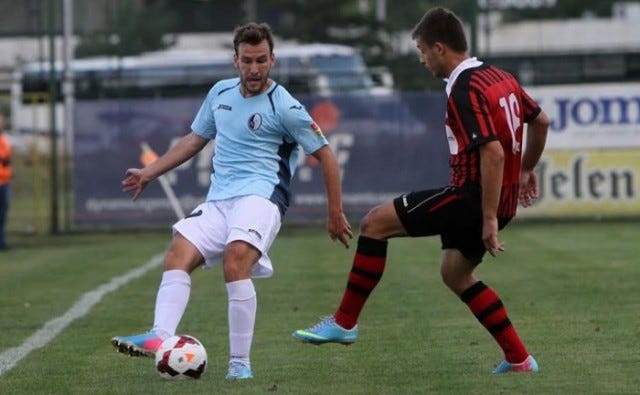
‘For me, that’s his biggest asset. He wins you over to the point where you want to run through a brick wall for him. I’ve never experienced that anywhere else, and I’ve had good relationships with plenty of managers.
‘He had a different approach for every player. It was as if, on a psychological level, he understood exactly how each individual functioned. He knew who needed a dressing-down and who required a gentler touch. He had the ability to keep everyone happy — both the players in the starting XI and those sitting on the bench.’
So how is that actually achieved?
‘He keeps every player who isn’t playing fully engaged,’ Grbić explains. ‘His authority alone tells you that if you’re not performing at the required level, you may not be around much longer.
‘Players become frustrated when a manager isn’t hardworking or starts inventing excuses and unnecessary complications. But when someone lives football twenty-four hours a day and approaches everything properly, then even if you’re not playing, you stay focused because you can see that what he’s doing is producing results.
‘And when it’s producing results, you can’t complain.’
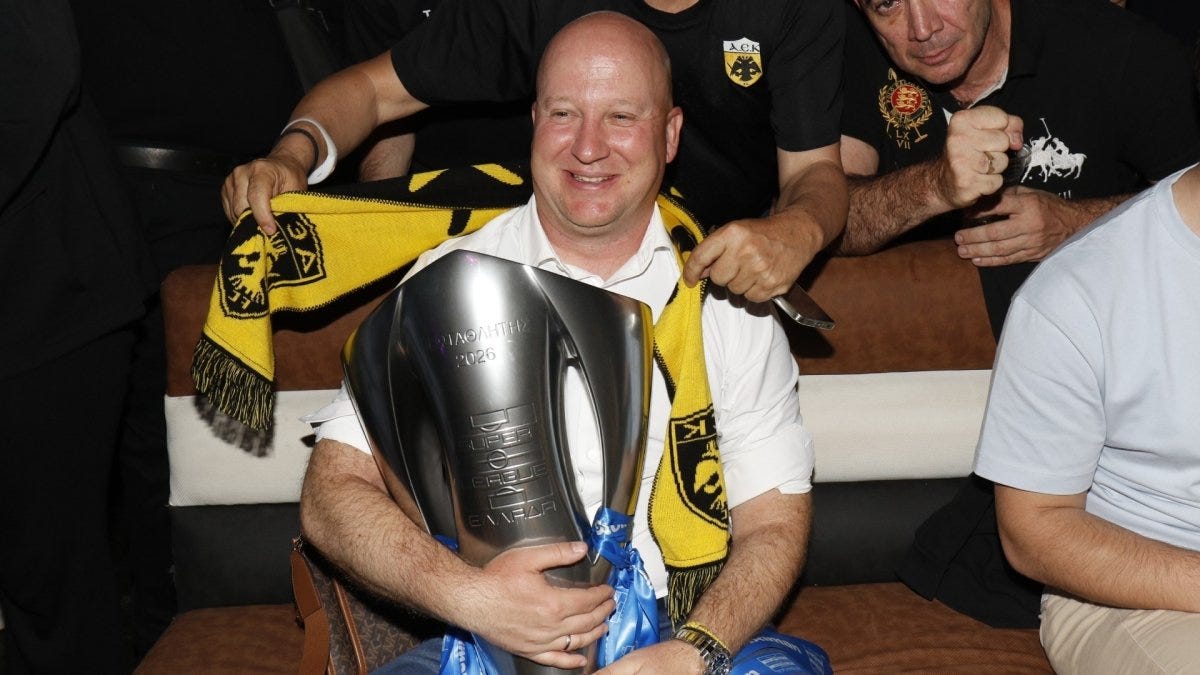
The CSKA Moscow analyst says that under Nikolić there is, in practical terms, almost no distinction between starters and substitutes.
‘For example, when a player who isn’t a regular starter comes into the starting XI, scores twice and nearly inspires a comeback against Rayo Vallecano, that player [Ed. Note: Zini from AEK, in the Conference League this season] isn’t a substitute. He’s a fully integrated part of the system Marko has built.
‘We experienced something similar at CSKA when we overturned the tie against Zenit in the second leg tie in the Russian Cup. That comeback was driven largely by players who weren’t regular starters but were nevertheless an important part of the team’s overall structure.’
Boban Nikolov, the midfielder Nikolić brought from Vardar to Videoton, paints a vivid picture of how the Serbian coach wins over his players.

‘He has this sixth sense about him and he’s a real character. There’s a story from the dressing room when he asked how many smokers there were in the squad. Someone replied that there were two. And he said: ‘I can’t win a title with only two smokers.’
‘You know what I mean? He’s clever, streetwise, and he enjoys that side of things. He doesn’t want a squad made up entirely of good boys. You need a bit of edge about you, both on and off the pitch.’
The North Macedonia international was captivated by Nikolić’s approach.
‘He might notice that you’ve gone out one evening and stayed out until one in the morning. If he knows that, he won’t call you into his office the next morning before training and start lecturing you. He’ll wait.
‘Then, if you’re the hardest runner in training, he’ll come over and shake your hand. If you’re a character at night, then be a character in the morning as well—if you’re not, then there’s a problem.’
There are no favourites under Nikolić, however. Nikolov experienced that first-hand.
‘The most important thing for him is what you do throughout the week. You can score three goals on Saturday and then train poorly because you think you’re somebody special. But you won’t play.
‘I had a similar experience myself after scoring the goal that secured the title for Videoton on the final day of the season.
‘Pre-season arrives, and I’m a young lad thinking I’m either about to earn a big move or become an automatic starter. My preparation wasn’t great and Marko puts me on the scales. I was one and a half per cent above the target body-fat level and I didn’t play in the opening Champions League qualifiers.
‘He immediately cuts through that Balkan mentality where you start believing you’re the main man. There’s none of that with him, and that’s exactly how it should be.
‘Afterwards, I worked every day for ten straight days. He put me back on the scales before the Malmö match, everything was fine and I played. There’s no such thing as, ‘I brought you to the club, you’re my player, don’t worry.’ In fact, he was hardest on us Balkan lads. But it was always fair.’

Partizan supporters still remember the 2016/17 title he delivered to them, which remains their last to date.
In Russia, he earned admiration for tactical innovations that forced opponents to adapt to him rather than the other way around.
In Athens, meanwhile, he has been elevated to near-idol status within a matter of months, in the uniquely passionate Greek way. Unsurprisingly, the head coach was given a new deal, until the summer of 2029.
So where is the ceiling for Marko Nikolić?
‘With all the knowledge he has, nothing would surprise me — not even seeing him reach one of Europe’s top five leagues and succeed there as well,’ says Petar Grbić.
Branislav Milošević is dreaming bigger.
‘I want to see him at Real Madrid,’ he says with a laugh. ‘But realistically, whenever he eventually leaves AEK, he’ll move to a top-level club because he genuinely deserves it. More importantly, I think he’s completely ready for that challenge.’
For Milošević, the manager of new Greek champions remains the same man he knew during his days at Rad.
‘I saw him recently for the first time in quite a while. He still has that same simplicity and humility about him. You can tell he hasn’t changed one bit.
‘Even though he hasn’t been my manager for years, there’s still this enormous respect I have for him. He’s not like every other coach.’ ◆